
Polarization in the Public Square: Bridging Canada’s Divides
Digital Public Square convened experts from across Canada to discuss the growing problem of social and political polarization.

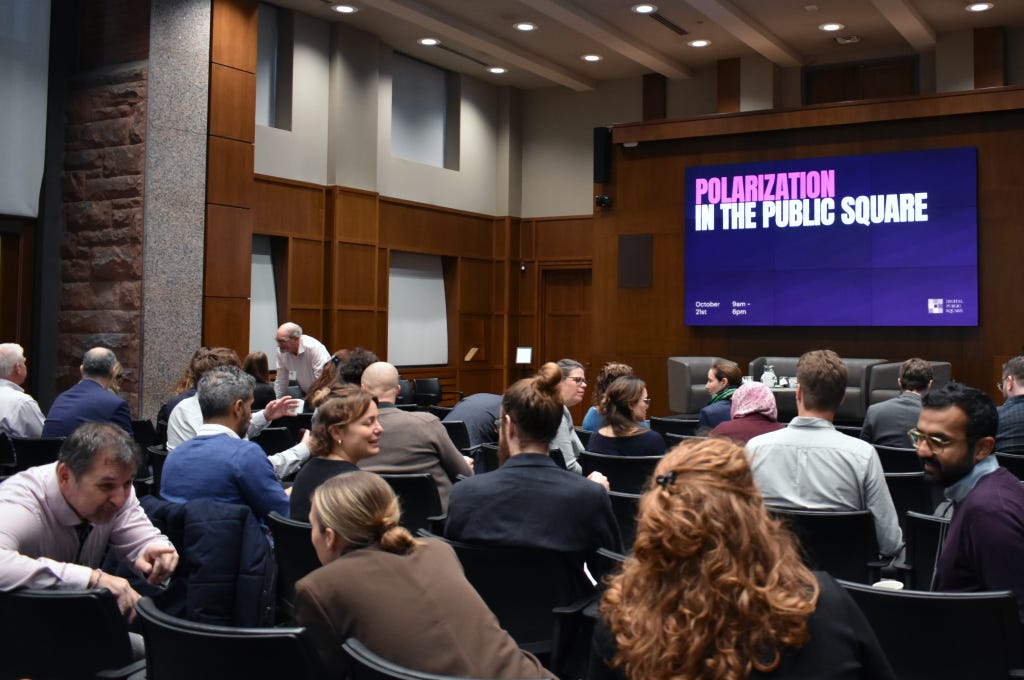
In October 2025, Digital Public Square held the Polarization in the Public Square Conference, an opportunity for civil society, academia, and government to come together to explore solutions to the growing problem of political and social polarization in Canada.
Polarization poses an urgent threat to the health of our democracy and the social fabric of our communities. Canadians are becoming more divided in how we perceive our social and political identities, leading to a rise in extreme ideologies and growing distrust in our democracy.
Disagreement, of course, is a fundamental feature of our political system. It’s how positions are formed, voters make decisions, and policies get made. There are also many good reasons for people to hold positions that don’t fall in the middle.
Increasingly, however, we are seeing those we disagree with not just as people with different views—or even political rivals—but as enemies who pose a threat to our way of life. This environment can breed illiberal political movements, political and ideological violence, and social isolation.
When trust breaks down—trust in our institutions, in our media, and in one another—our collective ability to solve complex, real-world problems falters. Polarization inhibits effective governance, stalls critical action, and makes it impossible to address pressing economic and social inequalities with unity and expertise. It damages the very communities we aim to serve by replacing constructive dialogue with antagonism, intolerance, and, in some cases, avoidance.
This phenomenon is accelerated and amplified by our digital environment. Algorithmic echo chambers, mis- and disinformation, and social media outrage cycles have created segmented realities. As Canadians, we are increasingly occupying different informational worlds, and this divide has tangible, negative consequences.
Digital Public Square recently ran a survey to measure the state of polarization in Canada. The results were eye opening. We found that affective polarization—the dislike of those with opposing views—is high.
Our survey found that the more left or right one identifies, the more negatively they see the other side, and the more positively they see themselves. They see the other side as immoral, intolerant, and extreme, and see the opposite traits in themselves. This is a well-researched phenomenon that has occurred in various contexts and, unfortunately, Canadians are following this path.
It’s not hard to see how polarization can corrode our democracy over time. Recognizing this problem, we organized the Polarization in the Public Square Conference to bring together researchers, practitioners, and government representatives to develop solutions to polarization before it’s too late.
We wanted to bring attention to the issue of polarization and explore how it intersects with societal challenges such as extremism, illiberalism, and intolerance. Our speakers came from a diverse range of personal and professional backgrounds. What they had in common was a commitment to standing up to polarization in our society—whether in our universities, places of worship, or online spaces.
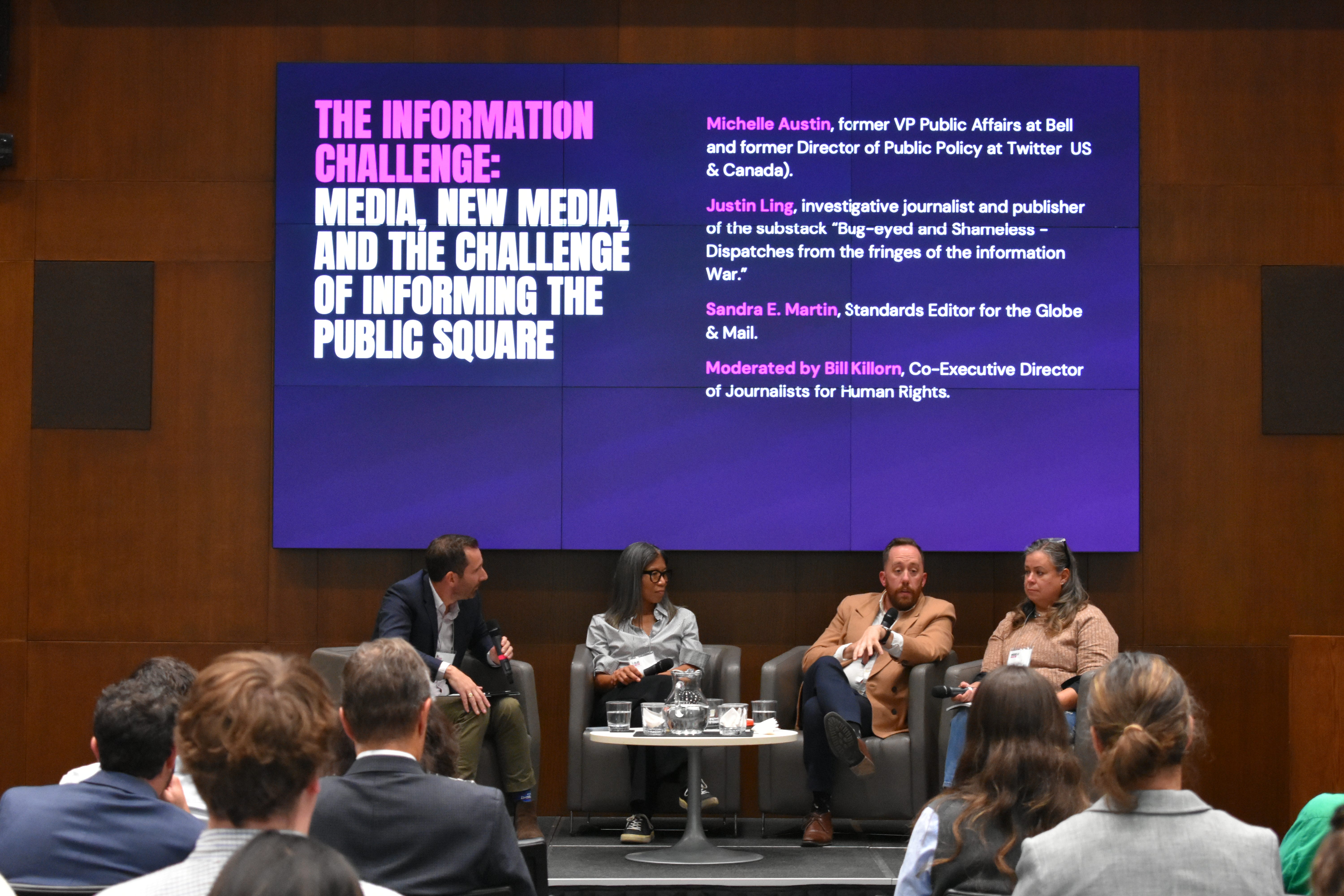
Throughout the conference, we heard how polarization prevents social and political progress in a range of contexts and on numerous issues. From stalling truth and reconciliation about Canada’s history with Indigenous peoples, to further fracturing the country’s media and information landscape, to dividing communities based on their views on Israel-Gaza, polarization impacts the most urgent issues Canada is facing.
While polarization can create vicious cycles that degrade our social and political fabric, we also heard about innovative strategies to counteract these forces. Although speakers at the Polarization in the Public Square Conference came from a variety of different backgrounds, common themes on tackling polarization emerged.
One of these key themes was the importance of listening. If we create space for genuine listening, we can test our assumptions about other people and learn where they are coming from. Those who share their perspectives can move beyond reflexive debates, gain greater reflection on why they hold the views they hold, and learn about others’ perspectives and narratives. Over time, conversations like these can break down barriers between those with seemingly opposing views.
Another key theme was the importance of finding values and identities that cut across groups and bridge differences. Often, groups think they are more different from one another than they really are in reality. When we put what we hold in common at the forefront—whether it’s being neighbours in a local community or sharing fandom in a sports team or supporting a bigger principle—these values and identities can transcend other differences or disagreements.
Finally, another theme was the role of structural factors in driving polarization. Unaccountable social media companies ignite polarization as part of their business models. Economic precarity and unresponsive governance erode trust in our institutions and create demand for polarizing movements and narratives. There is a proliferation of organized movements seeking to radicalize people online.
Structural challenges like these are the biggest roadblocks to addressing polarization. In controlled settings, facilitated listening and dialogue sessions can break down walls and depolarize participants. Institutions like civil society organizations, universities, and workplaces can emphasize shared identities to bring communities together. However, to confront polarization at the societal level, these efforts need to be scaled up to reach Canadians across the country, while governments need to bake in responses to polarization in their policies and legislation.
These barriers make standing up to polarization a formidable challenge. But we know a lot about what works—and what doesn’t work—in depolarizing our communities. The next step is to invest in solutions and do the work to bring Canadians across the country together.
In close collaboration with partners, Digital Public Square is testing approaches—both online and offline—for reducing polarization in Canada. Findings and learnings from these experiments will be available in Spring 2026. Follow Digital Public Square to stay up to date with our work on countering polarization in Canada.
Read more about the Polarization in the Public Square Conference here: https://digitalpublicsquare.org/insights/polarization-in-the-public-square